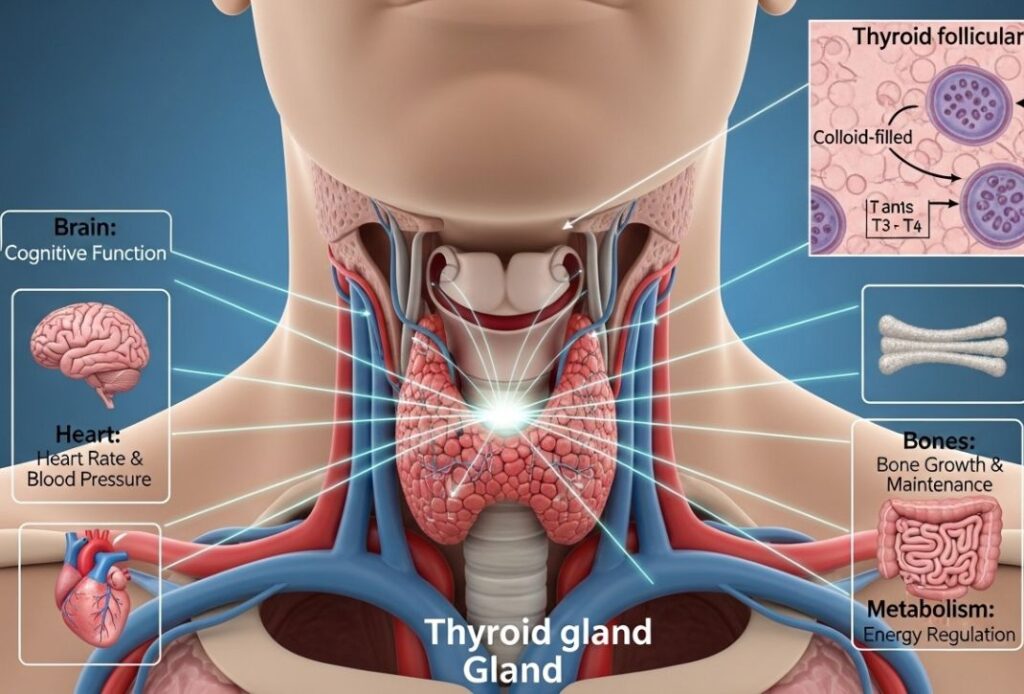

Have you ever wondered why your energy levels fluctuate, your weight changes unexpectedly, or your mood seems out of balance? The answer may lie in a small, butterfly-shaped gland located in your neck—the thyroid. Understanding What Does the Thyroid Do is essential because this tiny organ plays a massive role in keeping your body functioning smoothly.
In this complete guide, we will explore everything you need to know about thyroid function, including how it works, why it’s important, common disorders, symptoms, treatments, and practical ways to maintain thyroid health. Whether you’re looking for basic knowledge or deeper insights, this article will give you a clear and easy-to-understand explanation.
What Is the Thyroid Gland?
The thyroid is a small endocrine gland located at the front of your neck, just below your Adam’s apple. Despite its size, it has a powerful influence on your body.
Key Facts About the Thyroid:
- Shaped like a butterfly
- Part of the endocrine system
- Produces hormones that regulate metabolism
- Controls energy production and body temperature
Understanding What Does the Thyroid Do starts with knowing its primary job: producing hormones that regulate nearly every function in your body.
What Does the Thyroid Do in the Body?
The thyroid’s main function is to produce hormones that control metabolism—the process by which your body converts food into energy.
The Main Functions:
- Regulates metabolism
- Controls heart rate
- Maintains body temperature
- Supports brain development
- Influences digestion
- Affects muscle control
In simple terms, What Does the Thyroid Do can be summarized as: it acts like the body’s “control center” for energy and balance.
Thyroid Hormones Explained
The thyroid produces two key hormones:
1. Thyroxine (T4)
- Contains four iodine atoms
- Less active but abundant
2. Triiodothyronine (T3)
- Contains three iodine atoms
- More active and powerful
3. Calcitonin
- Helps regulate calcium levels
These hormones travel through your bloodstream and affect almost every organ in your body.
How the Thyroid Regulates Metabolism
Metabolism refers to how your body uses energy. The thyroid controls how fast or slow this process occurs.
When Thyroid Activity Is Normal:
- Balanced energy levels
- Stable weight
- Normal heart rate
When Thyroid Activity Is Imbalanced:
- Too fast = Hyperthyroidism
- Too slow = Hypothyroidism
This explains why understanding What Does the Thyroid Do is so important—it directly impacts your daily energy and health.
The Role of the Pituitary Gland
The thyroid doesn’t work alone. It is controlled by the pituitary gland in the brain.
How It Works:
- The pituitary releases TSH (Thyroid-Stimulating Hormone)
- TSH signals the thyroid to produce hormones
- Hormone levels adjust based on body needs
This feedback system ensures your body stays balanced.
Importance of Iodine in Thyroid Function
Iodine is essential for thyroid health.
Why Iodine Matters:
- Required to produce T3 and T4 hormones
- Found in foods like salt, seafood, and dairy
Iodine Deficiency Can Cause:
- Goiter (enlarged thyroid)
- Hypothyroidism
- Developmental issues in children
Globally, iodine deficiency affects millions of people, especially in regions with limited access to iodized salt.
Common Thyroid Disorders
Understanding What Does the Thyroid Do also involves recognizing what happens when it doesn’t work properly.
1. Hypothyroidism (Underactive Thyroid)
- Slow metabolism
- Weight gain
- Fatigue
2. Hyperthyroidism (Overactive Thyroid)
- Rapid metabolism
- Weight loss
- Anxiety
3. Goiter
- Enlarged thyroid gland
4. Thyroid Nodules
- Lumps in the thyroid
5. Thyroid Cancer
- Rare but serious condition
Symptoms of Thyroid Problems
Hypothyroidism Symptoms:
- Fatigue
- Weight gain
- Cold sensitivity
- Dry skin
- Depression
Hyperthyroidism Symptoms:
- Weight loss
- Rapid heartbeat
- Sweating
- Nervousness
- Insomnia
If you experience these symptoms, it’s important to consult a healthcare professional.
Real-Life Example of Thyroid Disorder
Consider a 35-year-old woman who experienced constant fatigue, weight gain, and depression. Initially, she thought it was stress. After testing, she was diagnosed with hypothyroidism.
Outcome:
- Started hormone replacement therapy
- Improved energy levels within weeks
- Regained normal lifestyle
This real-life example highlights why knowing What Does the Thyroid Do can help detect problems early.
How Thyroid Problems Are Diagnosed
Doctors use several tests to evaluate thyroid function:
Common Tests:
- TSH test
- T3 and T4 levels
- Thyroid ultrasound
- Biopsy (if needed)
Statistics:
- Around 5% of people worldwide have thyroid disorders
- Women are 5–8 times more likely to develop thyroid issues
Treatment Options for Thyroid Disorders
For Hypothyroidism:
- Hormone replacement therapy (Levothyroxine)
For Hyperthyroidism:
- Anti-thyroid medications
- Radioactive iodine treatment
- Surgery (in severe cases)
Lifestyle Support:
- Balanced diet
- Regular exercise
- Stress management
Diet and Nutrition for Thyroid Health
Foods That Support Thyroid Function:
- Iodine-rich foods (fish, dairy)
- Selenium (nuts, seeds)
- Zinc (meat, legumes)
Foods to Limit:
- Excess soy
- Processed foods
- High sugar intake
A healthy diet plays a key role in maintaining proper thyroid function.
Tips to Keep Your Thyroid Healthy
Here are some practical tips:
- Eat a balanced diet
- Use iodized salt
- Exercise regularly
- Manage stress
- Get regular checkups
Understanding What Does the Thyroid Do helps you take proactive steps to protect your health.
Thyroid Function and Mental Health
The thyroid also affects your brain and emotions.
Impact on Mental Health:
- Low thyroid → Depression
- High thyroid → Anxiety
Maintaining thyroid balance is crucial for both physical and mental well-being.
Thyroid and Weight Management
Many people struggle with weight due to thyroid issues.
How It Affects Weight:
- Hypothyroidism → Weight gain
- Hyperthyroidism → Weight loss
However, thyroid is not always the sole cause of weight changes—it works alongside diet and lifestyle.
When to See a Doctor
You should consult a doctor if you notice:
- Sudden weight changes
- Persistent fatigue
- Mood swings
- Neck swelling
Early diagnosis can prevent complications.
Conclusion
So, What Does the Thyroid Do? In simple terms, it controls how your body uses energy, regulates metabolism, and keeps vital systems running smoothly. Despite its small size, the thyroid has a huge impact on your health.
From controlling your heart rate to influencing your mood, this gland plays a central role in your well-being. Understanding its function can help you recognize symptoms early, seek proper treatment, and maintain a healthy lifestyle.